About Scale Welfare
Why do we exist?
Around 70 billion fish are farmed for food every year — more individual animals than any other farmed vertebrate — yet their welfare receives a fraction of the attention given to land animals. And aquaculture is still growing fast — with most of that growth happening in Asia.
Around 80% of the world's aquaculture production happens in East Asia and the Pacific. We chose to work in Southeast Asia because it combines enormous numbers of fish with tractability: welfare practices are largely unaddressed, and producers are open to change.
What we do
Scale Welfare works with farmers, retailers and international partners to improve the welfare of fish farmed in the Philippines and Vietnam. Our biggest current project is the Ice Slurry Project, improving tilapia slaughter in the Philippines; in Vietnam, our scoping research lays the groundwork for work on slaughter and transport.
Higher welfare, better product
This is our main angle: every intervention we pursue is chosen to improve welfare and product quality at the same time.
Better welfare is not a trade-off against productivity — the two go together. Many of the conditions that cause fish to suffer, such as poor water quality, overcrowding and rough handling at harvest, also damage the fish as a product: lower survival, disease, stress and bruising all reduce quality and value. Because changes that reduce suffering also benefit farmers and consumers, they can spread on their own commercial merits.
How we work
1. Identify
Field research to find the most cost-effective welfare interventions.
2. Pilot
Test interventions with producers on the ground, measuring welfare and commercial outcomes.
3. Scale
Spread what works across the industry to reach millions of fish.
Working with local partners
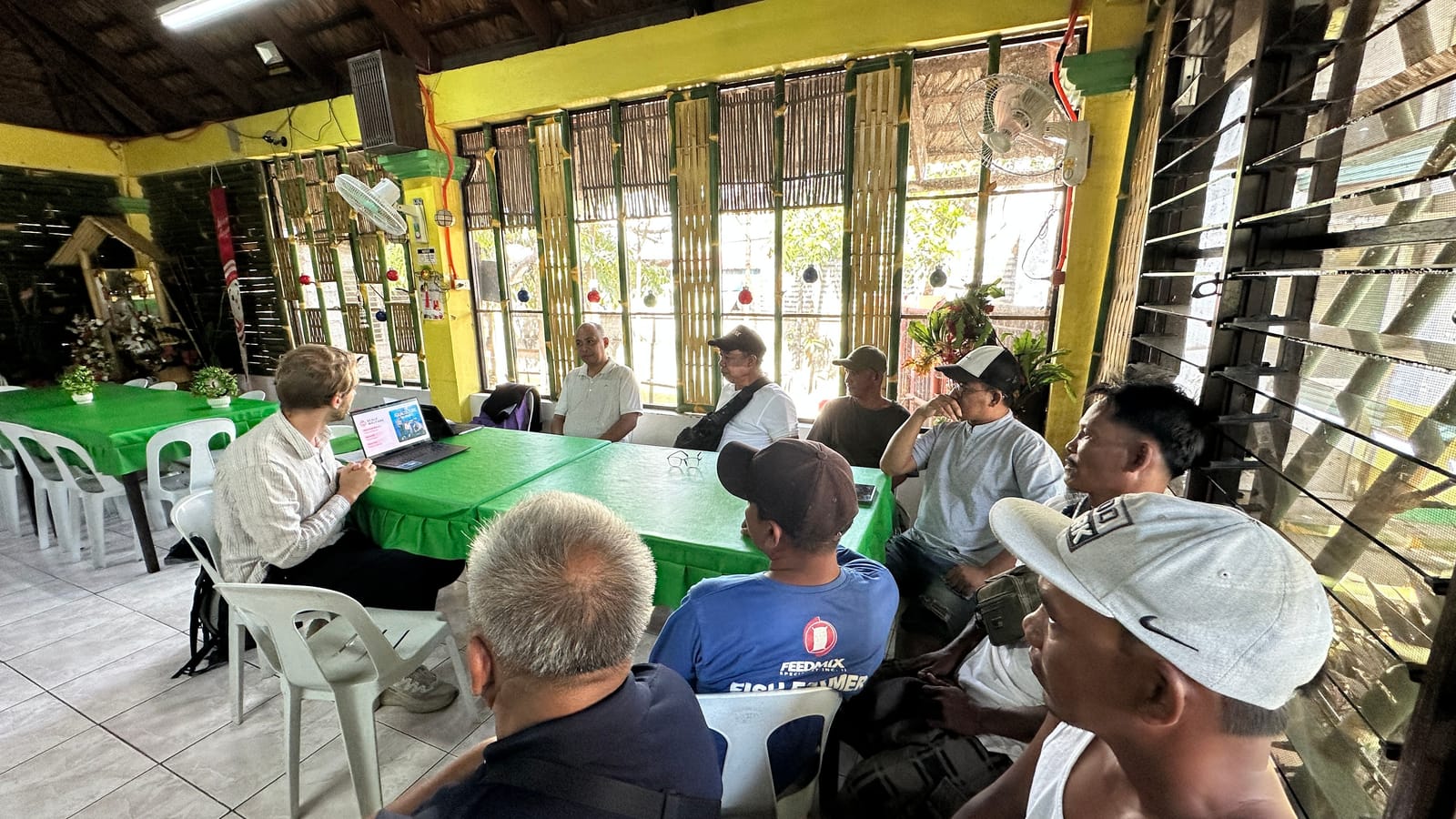
Progress here is more tractable than many assume. In both the Philippines and Vietnam, we have found producers, industry bodies and researchers genuinely open to collaborating on welfare improvements — from farm visits and trials to training sessions with local farming communities. Working alongside these local partners, rather than around them, is central to how we operate and to why our pilots can scale.